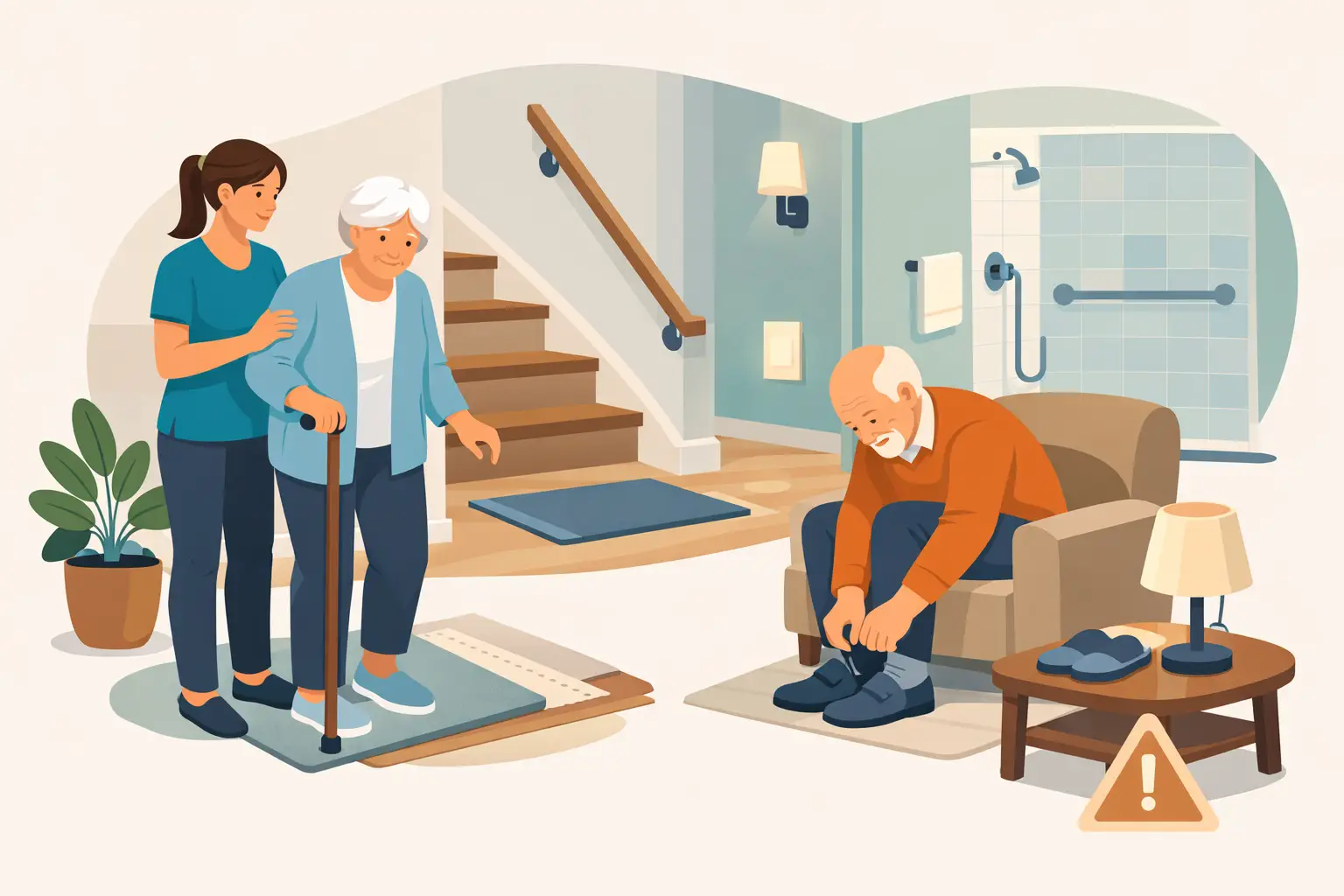
A single fall can change far more than a person’s physical comfort. It can make an older adult hesitant to walk to the mailbox, avoid bathing without help, or question whether living at home is still safe. A thoughtful fall prevention plan for seniors helps protect independence before a crisis forces difficult decisions. The goal is not to make life smaller or more restricted. It is to identify avoidable risks, build confidence, and put the right support in place for everyday life.
Falls are common, but they are not an inevitable part of aging. Risk often grows through a combination of factors: a new medication, weaker leg muscles, poor vision, an unfamiliar home layout, dehydration, illness, or rushing to answer the phone. Because each person’s health, home, and routine are different, prevention works best when it is personal rather than one-size-fits-all.
Start With a Clear Picture of Fall Risk
The first step is looking honestly at what has changed. A fall, near-fall, or sudden unsteadiness should never be dismissed as simple clumsiness. Even if there is no injury, it can be a valuable warning sign.
Families should pay attention to patterns. Does a loved one hold onto furniture when walking? Have they stopped using stairs, begun avoiding showers, or become unsteady when getting up at night? Are they wearing loose slippers because their usual shoes are uncomfortable? Small observations can reveal risks that may not come up during a brief medical appointment.
A primary care provider can help assess medical contributors to falls, including blood pressure changes, arthritis pain, diabetes-related nerve changes, heart concerns, balance disorders, and cognitive changes. A physical or occupational therapist may also assess walking, strength, transfers, and how well a person manages daily activities in their actual environment.
It is especially important to seek prompt medical guidance after a fall involving a head strike, loss of consciousness, severe pain, new confusion, inability to bear weight, or a suspected fracture. A fall can also signal an acute problem such as infection, dehydration, or a medication reaction.
Build a Fall Prevention Plan for Seniors Around Daily Routines
The most useful plan addresses the times and places where falls are most likely to occur. For many people, that means getting out of bed, walking to the bathroom overnight, bathing, preparing meals, climbing stairs, or moving too quickly when a pet, doorbell, or telephone demands attention.
Begin with mobility. A cane, walker, or other device only helps if it is the right type, adjusted to the right height, and used consistently. Some older adults resist assistive devices because they associate them with losing independence. In practice, the right device can make independence more possible. A therapist can provide guidance on safe use and help determine whether a device is needed indoors, outdoors, or both.
Strength and balance deserve equal attention. Gentle, professionally appropriate exercise can improve leg strength, posture, flexibility, and confidence. The right activity depends on the individual. Someone recovering from surgery or living with advanced arthritis may need a tailored therapy program, while another person may do well with a regular walking and balance routine. The safest plan is one a person can sustain, not an ambitious routine that causes pain or discouragement.
Vision and hearing also influence safety. Outdated eyeglass prescriptions, difficulty seeing in low light, bifocals on stairs, and untreated hearing loss can all affect balance and awareness. Regular eye care, good lighting, and discussion with an eye professional about vision needs during walking can make a meaningful difference.
Make the Home Easier to Move Through
A home safety review should focus on clear pathways, stable surfaces, and reliable support during transitions. It does not have to mean turning a familiar home into a medical setting. Often, practical changes preserve both comfort and dignity.
Pay particular attention to these common hazards:
- Loose rugs, electrical cords, low furniture, pet toys, and clutter in walking paths
- Dim hallways, stairways, entryways, and routes to the bathroom
- Bathrooms without grab bars, non-slip surfaces, or a secure place to sit while bathing
- Stairs without sturdy handrails on both sides where feasible
- Chairs, beds, and toilets that are too low or difficult to rise from
Nighttime safety is often overlooked. Place a lamp or motion-sensor light within reach of the bed, keep eyeglasses and a phone nearby, and create an unobstructed route to the bathroom. For some people, a bedside commode, scheduled toileting, or caregiver assistance may reduce the risk of rushing in the dark. The appropriate choice depends on mobility, continence needs, privacy preferences, and the layout of the home.
Footwear matters more than it may seem. Shoes should fit securely, have non-slip soles, and provide support. Walking in socks, backless slippers, or worn-out shoes can turn a minor loss of balance into a fall.
Review Medications and Health Changes Regularly
Medication-related falls are common, especially when a person takes several prescriptions or begins a new drug. Sleep medications, anxiety medications, pain medications, blood pressure drugs, diabetes medications, and some over-the-counter products may contribute to dizziness, sedation, urgency, or confusion. That does not mean a person should stop medication on their own. It means the full medication list should be reviewed by a prescribing clinician or pharmacist, including vitamins, supplements, and occasional medications.
Families can make this conversation more productive by documenting symptoms. Note when dizziness occurs, whether it happens after taking a medication, and whether it is related to standing, eating, bathing, or walking. Ask about side effects, possible interactions, and whether doses or timing can be adjusted.
Hydration and nutrition also play a role. Skipping meals, drinking too little, or experiencing illness can lead to weakness and lightheadedness. For older adults with heart, kidney, or fluid restrictions, a clinician should provide individualized guidance rather than relying on general hydration advice.
Include Family and Caregivers Without Taking Away Control
A fall prevention plan works better when everyone understands it. Older adults should be active participants in decisions about their home, routines, equipment, and support. Respectful language matters. Instead of saying, “You can’t do that anymore,” a family member might say, “What would help you feel steadier doing that?”
Caregivers need clear instructions as well. They should know how a loved one prefers to transfer from bed or chair, whether they use a walker, what symptoms require a call to the medical provider, and where emergency information is kept. If dementia or Alzheimer’s disease is involved, prevention may also include supervision at higher-risk times, simplified pathways, visual cues, and a consistent routine.
It can be difficult for adult children to coordinate these details from another city or while balancing work and their own family responsibilities. A care manager can provide an in-home or virtual assessment, organize recommendations across medical providers and caregivers, and help families turn scattered concerns into a workable plan. Concierge Care Network supports this kind of ongoing coordination so safety measures can evolve when health needs change.
Reassess After Every Change
Fall prevention is not a task to complete once and forget. A hospitalization, new diagnosis, medication adjustment, vision change, recent illness, or decline in strength can quickly alter a person’s risk. Revisit the plan after any fall or near-fall, even when no injury seems apparent.
Keep the plan simple enough to use. Record key contacts, mobility instructions, current medications, emergency preferences, and the specific changes made at home. Most of all, make space for the older adult’s priorities. Safety is strongest when it supports the life they want to keep living: a morning walk, a shower in privacy, dinner with friends, or the comfort of sleeping in their own home.
The right next step may be as small as replacing a loose rug or as involved as arranging a professional assessment. Acting early can turn a moment of concern into a renewed sense of security, confidence, and choice.
Talking it through helps.
If you're facing a decision right now, a free consultation will get you further than any article. We're glad to help, in the home or virtually.
Book a Free Consultation