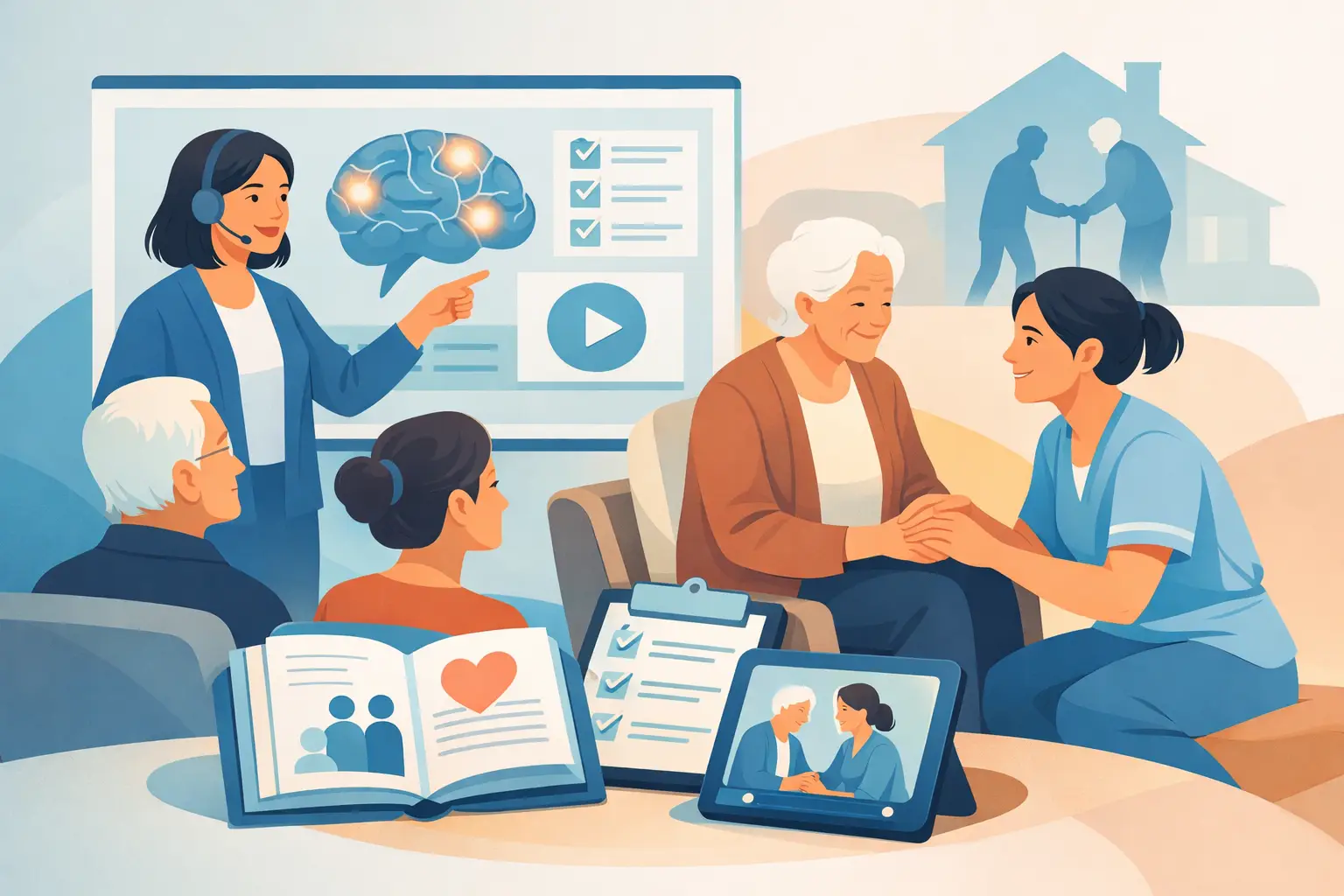
A difficult moment often arrives without warning: a parent insists they need to go home while standing in their own living room, or a spouse becomes frightened during a simple bath. The best dementia caregiver training resources help families respond with more than good intentions. They teach practical ways to protect safety, preserve dignity, and lower distress for everyone involved.
No class can make dementia easy. But the right education can replace guesswork with a calmer plan, especially when memory changes, communication problems, and care needs are affecting daily life at home.
What Good Dementia Caregiver Training Should Teach
The most useful training does not focus only on facts about Alzheimer's disease or other forms of dementia. Families need help with the moments that shape each day: getting dressed, taking medication, eating, bathing, sleeping, leaving the house safely, and responding when a loved one is confused or upset.
Look for education that explains how dementia can change a person's ability to process language, recognize surroundings, manage impulses, and communicate needs. This context matters. A repeated question or a refusal to bathe is rarely an attempt to be difficult. It may be a sign of fear, pain, sensory discomfort, fatigue, or an environment that has become hard to understand.
Strong programs also teach caregivers how to adjust their own approach. Short sentences, a quiet tone, simple choices, familiar routines, and adequate time can prevent many conflicts before they begin. Training should address safety as well, including fall prevention, wandering risk, medication oversight, driving concerns, and when behavioral changes warrant a call to a medical provider.
Best Dementia Caregiver Training Resources for Families
There is no single best course for every family. A spouse providing daily hands-on care may need different support than an adult child coordinating care from another state. The following resources are widely useful because they combine dependable education with practical guidance.
Alzheimer's Association Education Programs
The Alzheimer's Association offers education for families at many stages, from understanding an early diagnosis to managing changes in behavior and planning for future care. Its programs commonly cover communication, daily care, legal and financial preparation, and safety concerns.
These classes are a good starting point for caregivers who need a reliable overview and do not yet know what questions to ask. They can also help families use consistent language when discussing the diagnosis. Education alone may not resolve a specific home-care challenge, but it gives caregivers a foundation for recognizing what is happening and seeking appropriate help.
Dementia Care Education From the Alzheimer's Foundation of America
The Alzheimer's Foundation of America provides caregiver education, support opportunities, and information intended for people living with dementia and the families who support them. Its materials can be especially helpful for caregivers looking for clear explanations of memory loss, behavior changes, and available support.
This type of resource works well alongside local clinical guidance. Families should remember that a sudden change in confusion, agitation, sleep, or mobility is not always a normal progression of dementia. Infection, dehydration, medication effects, pain, constipation, and other medical problems can cause abrupt changes and should be evaluated promptly.
Teepa Snow's Positive Approach to Care
Teepa Snow's Positive Approach to Care is known for its hands-on, person-centered techniques. The approach emphasizes reading body language, approaching someone in a nonthreatening way, using supportive communication, and adapting tasks to a person's remaining abilities.
This training can be particularly valuable when personal care has become stressful. Rather than pushing through a shower, dressing task, or transfer that is causing distress, caregivers learn to pause, change their approach, and look for the reason behind the resistance. It is a practical fit for families and professional caregivers who want demonstration-based instruction rather than lecture-style education alone.
Family Caregiver Alliance Programs
Family Caregiver Alliance resources address the broader reality of caregiving: emotional strain, family conflict, planning, care coordination, and caregiver health. Dementia care is not limited to managing symptoms. It also involves communicating with physicians, organizing appointments, setting boundaries with relatives, and finding time to rest.
For adult children who are balancing work, children, and a parent's increasing needs, this broader support can be essential. Caregiver burnout can build slowly, often appearing as irritability, exhaustion, sleep problems, or a sense that every decision is urgent. Training that acknowledges the caregiver's well-being is more likely to be sustainable.
Local Area Agencies on Aging and Memory Care Programs
Many communities offer caregiver classes through Area Agencies on Aging, memory clinics, hospitals, senior centers, and nonprofit organizations. These programs may include support groups, skills workshops, respite information, and referrals to local services.
Local training has a distinct advantage: it can connect families to the actual resources available nearby. A national course may explain the value of adult day services or respite care, while a local program may help identify options, eligibility requirements, and transportation support in your community. Availability varies by location, so it is worth asking a physician's office, hospital social worker, or aging-services organization what is offered in your area.
Choose Training That Matches the Current Challenge
A caregiver facing nighttime wandering needs a different lesson than a family coping with accusations, missed medications, or unsafe driving. Before enrolling in a course, identify the two or three situations creating the most stress right now. Then choose training that offers realistic strategies for those issues.
Video-based programs can be convenient and repeatable, which helps when several family members share care. Live classes and support groups allow caregivers to ask questions and hear how others handle similar situations. One-on-one coaching is often the most effective choice when care needs are complex, conflict is escalating, or the home environment must be adjusted for safety.
Consider the instructor's experience as well. Look for programs led by dementia educators, nurses, social workers, occupational therapists, geriatric care professionals, or organizations with recognized dementia-care expertise. Be cautious with training that promises a universal technique, blames families for challenging behaviors, or treats every person with dementia the same way.
Turn Training Into a Daily Care Plan
Information becomes more helpful when it is used consistently. After a class or workshop, write down a few changes to try over the next week. For example, a family might keep a simple communication log, adjust the morning routine to reduce rushing, place visual cues near the bathroom, or schedule difficult tasks during the time of day when their loved one is usually most rested.
Share these strategies with everyone involved, including relatives, paid caregivers, and other professionals. Consistency can reduce confusion. If one caregiver offers reassurance and another argues about facts, the person with dementia may experience more distress, not less.
It is also helpful to keep notes on what works. Record patterns around agitation, meals, sleep, pain, toileting, and medication changes. These observations can give a physician or care manager meaningful information that a brief appointment may not reveal.
When Education Should Be Paired With Professional Support
Training is valuable, but it does not replace medical care or individualized assessment. Families should seek professional guidance when there are falls, weight loss, missed medications, suspected financial exploitation, wandering, caregiver exhaustion, or behavior that creates a safety risk.
A care coordinator can help translate training into a plan that fits the individual, the home, and the family's capacity. At Concierge Care Network, this may include caregiver education, medication oversight, dementia guidance, coordination with medical specialists, and ongoing advocacy as needs change. The goal is not simply to provide information. It is to help families use it with confidence.
The right resource should leave a caregiver feeling less alone and more prepared for the next difficult moment. Start with the challenge in front of you, practice one or two new approaches, and ask for added support before a manageable situation becomes a crisis.
Talking it through helps.
If you're facing a decision right now, a free consultation will get you further than any article. We're glad to help, in the home or virtually.
Book a Free Consultation